


How Can Fish Farmers Instantly Test Pond Water Quality Without Laboratory Testing?
- Mar 27
- 3 min read
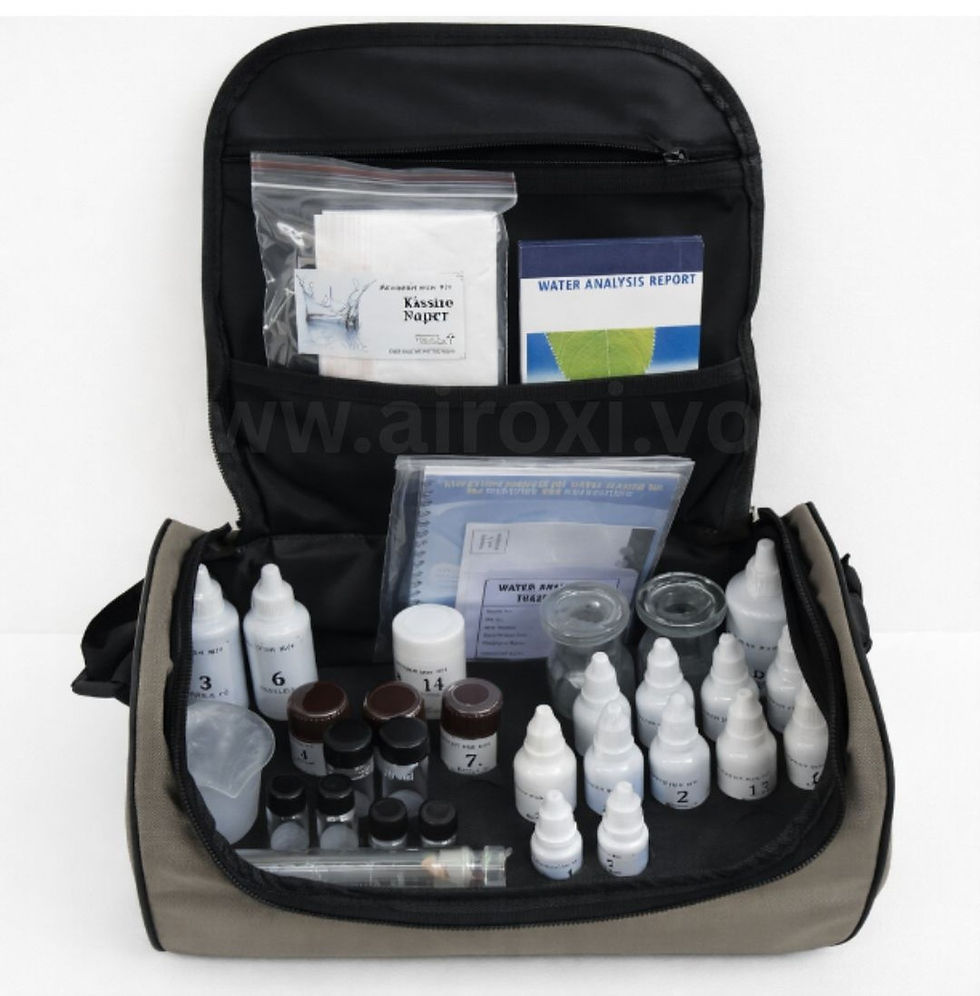
Fish farmers can instantly test pond water quality using a Fisheries Water Testing Kit, a portable aquaculture testing system that measures nine critical water parameters including pH, dissolved oxygen, ammonia, nitrates, alkalinity, hardness, carbon dioxide, hydrogen stupide, and phosphate. The kit provides fast on-site results without laboratory testing, helping farmers prevent fish stress, disease outbreaks, and mortality while maintaining optimal water conditions.
Quick Summary
A Fisheries Water Testing Kit allows aquaculture farmers to quickly analyze the most important water quality parameters directly at the pond site. The portable kit can perform up to 900 total tests (100 tests per parameter) and provides accurate results within minutes. By monitoring dissolved oxygen, ammonia, pH, alkalinity, and other parameters, farmers can detect water quality problems early and maintain a healthy environment for fish and shrimp farming.
Why is water quality testing important in fish farming?
Water quality directly affects fish survival, growth rate, feed conversion efficiency, and disease resistance. Even small changes in oxygen levels or ammonia concentration can cause serious problems in aquaculture ponds.
Poor water conditions often lead to:
● Fish stress and reduced appetite
● Slow growth rates
● Disease outbreaks
● Toxic ammonia accumulation
● Low dissolved oxygen levels
● Increased fish mortality
Regular pond testing helps farmers identify problems early and take corrective action before losses occur.
Monitoring key parameters such as pH, dissolved oxygen, alkalinity, and ammonia ensures a stable environment that supports healthy fish development.
Farmers can also combine water testing with advanced aeration technologies and oxygen systems to maintain ideal pond conditions.
What is a fisheries water testing kit?
A Fisheries Water Testing Kit is a compact and portable water analysis system specifically designed for aquaculture applications such as fish ponds, shrimp farms, and hatcheries.
The kit allows farmers to perform instant water quality analysis directly at the pond site
without sending samples to a laboratory. Key features include:
● Portable field testing equipment
● Easy-to-use testing methods
● Rapid results within minutes
● Accurate aquaculture water analysis
● Capability to test 9 critical water parameters
The testing system has been accredited by the UNESCO Microbial Resource Center for Marine Biotechnology at the Mangalore College of Fisheries, confirming its reliability for aquaculture water quality monitoring.
Which water parameters can a fisheries water testing kit measure?
The kit can measure nine essential water quality parameters that influence fish and shrimp farming performance.
Monitoring these parameters helps farmers track oxygen availability, nutrient levels, and toxic compounds in aquaculture ponds.

What are the ideal water parameter ranges for fish farming?
Maintaining optimal water conditions is essential for high fish survival and productivity.
Parameter | Ideal Range for Aquaculture |
pH | 6.5 – 8.5 |
Dissolved Oxygen | Above 5 ppm |
Ammonia | Less than 0.02 ppm |
Alkalinity | 50 – 150 ppm |
Hardness | 50 – 150 ppm |
Nitrate | Less than 1 ppm |
Regular monitoring helps farmers maintain these ranges and avoid sudden environmental changes that can harm fish.

What are the technical specifications of the fisheries water testing kit?
The water testing kit is designed to provide accurate and rapid pond water analysis in aquaculture operations.
Key specifications include:
● Tests 9 water parameters in a single kit
● 100 tests available per parameter
● Up to 900 total tests per kit
● Instant field testing results
● No electricity required
● Portable equipment suitable for pond-side use
● Designed for freshwater aquaculture systems The kit includes:
● Chemical reagents for all parameters
● Glassware and measuring accessories
● Drop titration equipment
● Colour comparison charts
● Step-by-step operating manual
This complete setup allows farmers and technicians to perform water analysis directly at the farm without specialized laboratory equipment.
How does a fisheries water testing kit work?
The testing process is simple and designed for quick field operation by farmers or aquaculture technicians.
Step 1: Collect a Water Sample
Take a water sample from the fish pond using the glassware provided in the kit.
Step 2: Add the Required Reagents
Add specific reagent drops depending on the parameter being tested.
Step 3: Observe the Reaction
Some tests involve color changes, while others use drop titration methods.
Step 4: Compare Results
Use the color comparison chart included in the kit to determine the exact parameter value.
Each test typically takes only a few minutes, allowing farmers to quickly monitor pond conditions.
How does a water testing kit compare with laboratory testing?
Feature | Fisheries Water Testing Kit | Laboratory Water Testing |
Result Time | Instant results | 2–5 days |
Cost per Test | Low | High |
On-Site Testing | Yes | No |
Ease of Use | Farmer-friendly | Requires trained technicians |
Testing Frequency | Can be done regularly | Usually occasional |
For routine monitoring, portable kits provide faster and more practical results for aquaculture operations.
What are the benefits of using a fisheries water testing kit?
Using a portable water testing system provides several advantages for aquaculture farmers.
Instant Results
Water quality problems can be detected immediately without waiting for laboratory reports.
Cost Savings
Farmers can avoid expensive lab testing by performing regular pond monitoring themselves.
Early Problem Detection
Frequent testing helps prevent:
● Fish mortality
● Oxygen depletion
● Toxic ammonia accumulation
Easy to Use
The testing process is designed for non-technical users, making it ideal for farmers.
Portable Field Testing
The compact design allows testing anywhere around ponds, hatcheries, or aquaculture farms.
Where can a fisheries water testing kit be used?
This testing kit is widely used across various aquaculture operations including:
● Fish farming ponds
● Shrimp farming ponds
● Aquaculture hatcheries
● Fish seed production units
● Aquaculture research laboratories
Regular monitoring helps maintain stable pond ecosystems and improves fish survival rates.
Frequently Asked Questions
How often should fish pond water be tested?
Fish pond water should ideally be tested two to three times per week, especially during intensive farming periods or when stocking density is high.
Why is dissolved oxygen important in fish farming?
Dissolved oxygen is essential for fish respiration. Low oxygen levels can cause stress, slow growth, and fish mortality, particularly during warm weather or high stocking densities.
Can this kit replace laboratory water testing?
For routine monitoring, the kit provides accurate and reliable on-site results, reducing the need for frequent laboratory testing.
How many tests can one kit perform?
Each parameter can be tested up to 100 times, allowing a total of 900 tests per kit.
Is the kit suitable for shrimp farming?
Yes. The water testing kit is suitable for both fish and shrimp aquaculture systems.
Contact Information
For more information about aquaculture water testing kits, aeration systems, and pond oxygen solutions, contact:
📞 +91 70410 04098
📞 +91 96521 22060
#airoxitube #airoxi #airoxidiffuser #airoxiproducts #aquarium #aquaculture #fishing #fishingfarm #shrimp #shrimptank #fishtank #tank #RAS #aeration #aerationsystem #bubbles #bubble #post #postoftheday #oxygenation #hatcheries #shrimpfarm #aqualife #blower #microbubblegenerator #transportationaeration #turbineblower #submersibleaerator #biofloc #growoutponds #nurseries #oxygenconcentrator #diffuser # #NFDB and #national fisheries development board


Comments